DEBUSSY · RAMEAU – VÍKINGUR ÓLAFSSON

DEBUSSY · RAMEAU – VÍKINGUR ÓLAFSSON

Brilliant Elegance: Ólafsson’s Reverie through Debussy and Rameau

Barbara Clark, March 2020

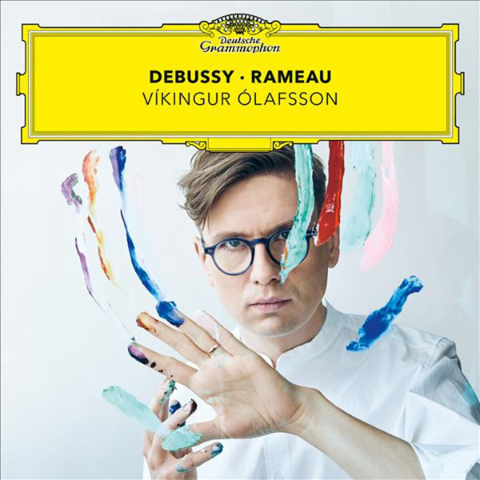
Víkingur Ólafsson’s album, featuring the works of two giants of French keyboard music, Rameau and Debussy, is a true masterpiece that continues to showcase his exceptional pianism and impeccable taste in programming. Following the resounding success of his Bach album, Ólafsson once again proves his musical prowess with this captivating exploration of the contrasting yet harmonious worlds of Rameau and Debussy.

The album opens with Debussy’s delicate yet evocative “La damoiselle élue – Prélude,” setting the stage for the journey ahead. From the very first notes, Ólafsson’s profound understanding of Debussy’s intricate textures and dreamlike atmospheres is evident. Moving through the collection, Ólafsson’s interpretation of the “Estampes – Jardins sous la pluie” showcases his ability to conjure images with his playing, making the raindrops come alive on the keyboard.

The inclusion of extracts from “Children’s Corner” offers a charming respite, with Ólafsson capturing the innocence and playfulness of these pieces. His rendition of “Préludes I – Des pas sur la neige” and “La fille aux cheveux de lin” is marked by sensitivity and a profound connection to Debussy’s introspective universe.

Ólafsson’s command over the keyboard truly shines in his performance of Rameau’s “Pièces de clavecin.” Despite the historic disparity between the harpsichord and the modern piano, Ólafsson expertly navigates Rameau’s ornate compositions, infusing them with a unique pianistic touch while preserving their Baroque essence. The contrast between Rameau’s intricate counterpoint and Debussy’s impressionistic colors is a testament to Ólafsson’s versatility as a pianist.

One of the highlights of the album is Ólafsson’s take on Debussy’s “Preludes II – Ondine.” His delicate touch and nuanced phrasing bring out the water nymph’s allure and mystique, creating an enchanting auditory experience. Similarly, his performance of Debussy’s “Images I – Hommage à Rameau” pays a fitting tribute to the connection between the two composers, allowing the listener to perceive the subtle threads that tie their music together.

In the final segment of the album, Rameau’s “The Arts and the Hours” serves as a magnificent conclusion. Ólafsson’s masterful interpretation highlights the depth of emotion present in Rameau’s compositions, a reminder of the enduring power of Baroque music.

Throughout the recording, Ólafsson’s vision of Rameau and Debussy is apparent, driven by a genuine love for their music. He manages to bridge the gap between two distinct eras, revealing the common threads that link these composers across time and style. His ability to capture the essence of each piece while infusing it with his unique artistic sensibility is truly remarkable.

Víkingur Ólafsson’s exploration of Debussy and Rameau on this DG release is an auditory delight. His extraordinary pianism, combined with his thoughtful programming, brings these composers to life in ways that are both faithful to their intentions and refreshingly innovative. This album stands as a testament to Ólafsson’s status as a pianist of unparalleled talent and an artist who continues to push the boundaries of interpretation.
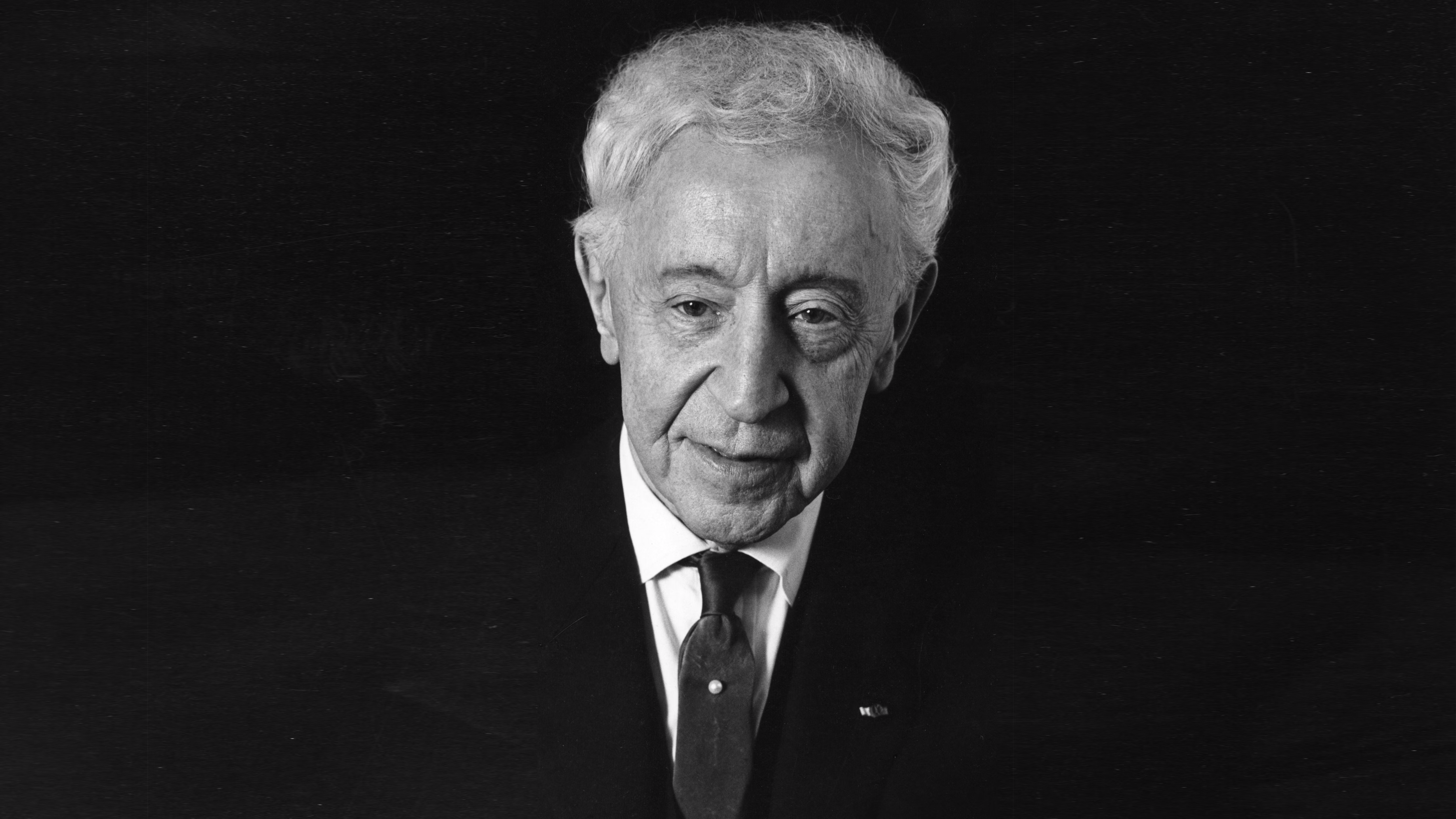
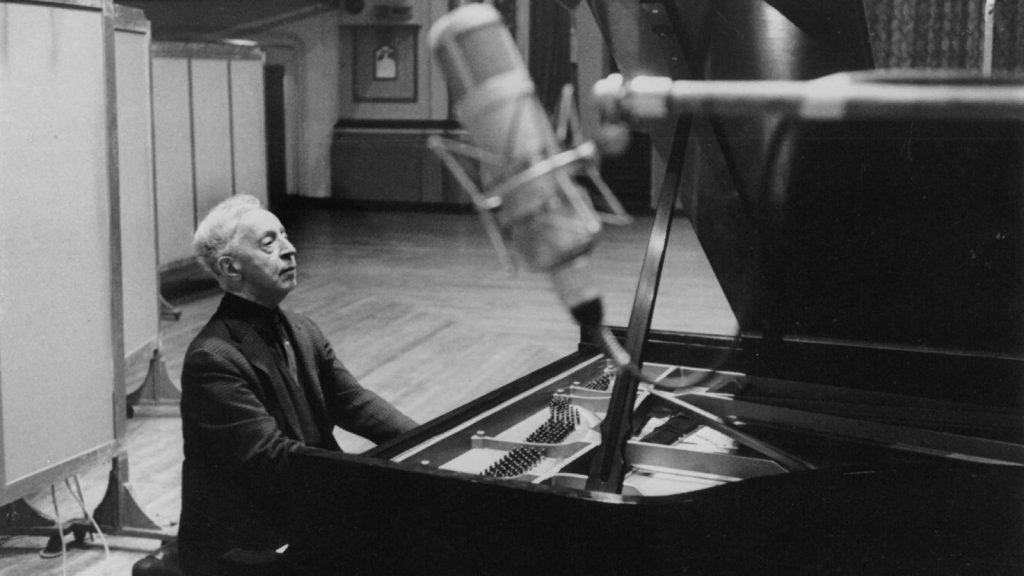
ARTHUR RUBINSTEIN

ARTHUR RUBINSTEIN

The pianist, the legend

March 2020

The pianist Arthur Rubinstein, born on January 28th, 1897 in Lodz (Poland) and dead in 1982 in Geneva as a result of a sudden infection, is considered one of the greatest names in musical mythology of our century. He was always a firm cosmopolitan and his extraordinary optimism was capable of extracting the maximum dose of happiness from every minute of his existence. 

He began his piano studies at the age of 3 and when he was 5 he had his first public concert. At the age of 10 he was spotted by the well-known violinist Joseph Joachim, who was notably admired by the abilities of the young pianist. Therefore, he decided to take responsibility for the musical and pianistic education of the young Arthur. 

At the approximate age of 15 he studied with the teacher Ignaz Pederewski and a year later he went to study in Paris with Paul Dukas and Maurice Ravel. Between 1919 and 1920, the young pianist was already a frequent guest on the entire world-class concert circuit. Around 1930 he became a known and recognized figure worldwide. The good reviews of his concerts reached the most remote places in the world. His biographers comment that during those times he spent between 12 and 16 hours a day studying and improving his piano playing technique. 

Not only his performances were breathtaking but Rubinstein also surprised us with his versions of traditional pieces, which at the time were accused to be out of date. An interpreter who was able not only to maintain himself, but to renew himself in technique and style.  Works by Beethoven, Chopin,  Schubert, or  Brahms were renewed under his genius hands, brilliantly adapting them to the more modern interpretive criteria. 

One of the reasons why his pianism is still very present and relevant is the personal touch that he provided to the beautiful the sound that he achieved. Only with the first notes you can easily identify the artist. The beginning of Poulenc’s movements or the initial measures of the Appasionata are sufficient to recognize his treatment of color, melody and the use of the pedal. Rubinstein’s charismatic sound was from his youth, clear, crystalline and consistent. 

The first impression of the relatively young Rubinstein was of improvisational genius. But his progressive fidelity to what was written in contrast to the general overcoming of technique, sometimes supposed a problem for him. So when he had already reached his musical maturity, Rubinstein decided to dismiss certain works that had been in his repertoire. “I don’t dare to play Iberia now,” he once said, “because young pianists study a lot and play everything that is on paper.” He then devoted himself to the romantic repertoire. He delved with lyrical and brilliant gravity into Brahms’s pianism and he masterfully reinterpreted his already virtuous Chopin works. 

Rubinstein was a maestro in every sense of the word and the heritage of his pianism will last forever.

PLAISIR D’AMOUR – ANGELA GHEORGHIU

PLAISIR D’AMOUR – ANGELA GHEORGHIU

Don Roberts, February 2020

Plaisir d’amour is the new cd from Soprano Angela Gheorghiu and accompanying pianist Alexandra Dariescu. Gheorghiu has been praised for possessing the greatest personality of the last decades. Angela Gheorghiu’s voice is highly distinctive. The repertoire of this cd, with famous melodies is precious and it excels in French pieces, like “Après un rève” by Fauré. Even with the lack of an orchestra accompanying her instead of the piano, the CD keeps its grandiloquence. 

Brought together by a varied melodic repertoire, soprano and pianist explore musical eras and gratefully link the pieces, around the theme of love and its poetic and dreamy illustrations. The controlled and sometimes a bit too musically restricted performance is noticeable during all the recording. Some critics might argue that she could have freed herself a bit more. However, her interpretations are honest and full of credibility.  

From the first track, the singer delights us with her vocally spectacular ability, achieved through the years. We can admire the brilliant maturity of her voice, showing off a beautiful center and bass, wrapped up with the velvet touch that has always characterized her voice, with a great sense of phrasing and almost always confortable sharp rises.  

The Romanian singer knows how to turn a no so complex program it into small scenes loaded with drama, melancholy or exuberant amusement depending on the case. She’s sheer delicacy in Debussy’s marvelous Beau soir, playful at Paisiello’s Nel cor più non mi sento, and cautious and restrained with Bellini’s Vaga luna. She definitelly shows of her admirable control of the breath control and bel canto singing line.  

The song by Martini that gives title to the album is spotless, and we can’t forget mentioning Chopin’s passionate Tristesse, to conclude with the vivid power of El vito, by Obradors, after marveling us with the two Lieder by Richard Strauss. 

On the piano, Alexandra Dariescu provides a steady and varied accompaniment in the musical and deep expressive intentions only sometimes with a little lack of rapport with Gheorghiu’s winds. Her virtuosistic qualities shine thanks to the program, especially in the piano arrangement of Tchaikovsky’s Waltz of Flowers. However, the sometimes violent energy of the play might not exactly match with the original character of the piece with its wide phrases. A marked musicality, is evident from the Trois Morceaux, enigmatic the first, more fantastic the second and cheerful and lively the third. The Romanian Dance of Ciortea was overwhelming while there was a subtle lack of precision in the Nocturne Op.6 n.2 by C. Schumann. 

All in all, this is a precious recording that should definitely have a space in the collection of any music lover. 

ENCOUNTER – IGOR LEVIT

ENCOUNTER – IGOR LEVIT

Igor Levit’s “Encounter”: A Thoughtful Exploration of Musical Conversations

Mark Jordan, February 2020

Igor Levit’s “Encounter” is a contemplative and intricate album that brings together a diverse array of composers, spanning from Bach and Brahms to Busoni, Reger, and Feldman. The piano virtuoso’s journey through this musical landscape is characterized by his intense introspection, which was nurtured during the challenging times of the Covid era. While the album offers moments of profound insight and compelling interpretation, it occasionally falls short of fully capturing the emotional depths one might anticipate from Levit’s reputation.

The album opens with an engaging fusion of Bach’s chorale preludes, reimagined with a nuanced touch. Levit’s performances exude a sense of elegance and fluency, as if the pieces have found a natural home in this context. However, there are moments where one might yearn for a deeper exploration of the profound emotional and spiritual themes that these chorale preludes embody. Levit’s approach, while undeniably skillful, occasionally lacks the profound emotional resonance that distinguished interpretations, like Brendel’s rendition of “Ich ruf zu dir,” are known for.

Brahms’s “Serious Songs,” a collection often associated with vocal performances, takes on an intriguing dimension as Levit presents them solely on the piano. While some listeners might find this reinterpretation to be engaging and thought-provoking, others may experience a sense of something missing, particularly in the absence of the human voice that originally lent these songs their emotional weight. Nonetheless, Levit’s placement of these pieces within the album’s program holds a certain logical cohesion, highlighting the intricate web of connections between composers and their influences.

One of the standout features of “Encounter” is Levit’s inclusion of Morton Feldman’s “Palais de Mari,” a contemplative and meditative composition inspired by Syrian ruins in the Louvre. Levit’s interpretation showcases his ability to bring forth a sense of profound stillness and introspection, allowing listeners to immerse themselves in the delicate world Feldman has crafted. The slower-than-usual tempo chosen by Levit amplifies the sense of quietude, drawing listeners into an introspective sonic journey.

Levit’s commitment to music as a means of grappling with life’s most profound questions is evident throughout “Encounter.” His dedication to his craft and his willingness to explore unconventional pairings of composers demonstrate his artistic curiosity and his desire to engage with audiences on a deeply emotional and intellectual level. It’s worth noting that the album’s production quality, while generally solid, occasionally falls short in capturing the full tonal spectrum and subtlety of Levit’s playing.

In the end, “Encounter” presents a collection of performances that, while not entirely meeting the lofty expectations associated with Levit’s name, still offers a wealth of thought-provoking musical conversations. The album’s exploration of connections between composers, styles, and eras is a testament to Levit’s artistic vision and his willingness to delve into the profound depths of music. It may not be the epoch-making opus some may have anticipated, but it remains a valuable addition to the discography of an artist known for his intellectual curiosity and passionate dedication to his craft.

PASSION – PHILIPPE JAROUSSKY

PASSION – PHILIPPE JAROUSSKY

Don Roberts, February 2020

The album Passion Jaroussky was released in 2019, when the French countertenor celebrated 20 years since his debut that propelled him to the spotlight.  With this release the countertenor and world star Philipp Jaroussky had one main aim: to share with us his great and never-ending passion for singing, which is transmitted in any of the varied pieces he tackles: from very different arias by Vivaldi, Porpora and Agostino Steffani through the early Bohemian classic Josef Mysliveček to Gluck, Massenet and even John Lennon compositions. 

The triple album, which contains new and well-known recordings, is a sequel to his album The Voice, presented seven years ago. It’s a selection of the key pieces from his previous record releases that creates the basis of this compilation.  Among this collection of works, we can find pieces recorded with his own group Artaserse, Andrea Marcon and the Venice Baroque Orchestra, the Boston Early Music Festival Orchestra, Diego Fasolis and I Barocchisti, Jérôme Ducros and the Ebène Quartet, and Christina Pluhar and L’Arpeggiata. This compilation includes works by Bach, Händel, Telemann, Gluck, Monteverdi, Cavalli, Purcell, Saint-Saëns, Massenet or Charles Trenet and others. 

The countertenor wanted to involve his audience and to make them part of the choosing procedure, he announced: “It was you, my followers, who chose the first track for me, after receiving more than seven million views on YouTube in just two years. It is the beautiful Sileant Zephyri by Vivali. This composer has definitely been my lucky charm! ” 

Surrounded by all this great artist and friends, Jaroussky’s virtuosity shines even more, and the result is an outstanding release. His talented voice keeps on shape, consistently displaying the qualities that have made him one of today’s most popular countertenors: angelic timbre, precise agility, melancholic phrasing, and overflowing powerful expressiveness.  

He is brilliant, and what kept him at the top for so long is the fact that he excels in many different areas. He has no rival when it comes to muscular castrato arias from Handel like “Furibondo spira il vento,” from Partenope, HWV 27.  Jaroussky’s velvety voice blooms in the Works of Porpora, Gluck, Pergolesi, and the later Vivaldi, all represented here. Jaroussky is also a charming interpreter of 17th century opera with which he feels a deep emotional bond. And just as a final proof of his admirable versatility, he includes here a rare selection from his performances of Romantic music, very unusual for a typical countertenor repertory. The wide range of different historical periods that the album covers, reaches as far as John Lennon and Yoko Ono’s Oh My Love, the last piece of the program.  

All of the pieces in this collection are masterfully performed by the artist who once again proves to be of the great singers of our time. 

SOUND OF SILENCE – MILOŠ

SOUND OF SILENCE – MILOŠ

Richard Phillips, January 2020

Three years after suffering a devastating hand injury, Guitarist Miloš Karadaglić, returned with a new album, Sound of Silence. The Montenegrin guitarist has recorded in the past several albums drawing on rock music. His 2016 release, Blackbird, offered guitar versions of Beatles songs, for example. 

But in Sound of Silence his approach to music completely deferent and much more intimate and profound. The recording, published by Decca, features meditative solo classical guitar pieces he learned long time ago and helped him excel in the music field, together with a selection of pop and jazz hits curated by Milos himself. A wide range of top artists such as Simon & Garfunkel and Leonard Cohen or Norah Jones have been reborn in phenomenal new versions for guitar and other instruments. 

Guest artists include saxophonist and friend Jess Gillam who joins Miloš for two melancholic duets, as well as hang payer Manu Delago, a regular collaborator of Björk. We can find in this CD Miloš’ interpretations of songs like Portishead’s ‘Sour Times’, Radiohead’s ‘Street Spirit’ and Leonard Cohen’s ‘Famous Blue Raincoat’ as well as guitar pieces by Pujol and Tarrega.  

The listeners will surely appreciate Miloš’ smoothly pulsing string pizzicatos and floating piano figurations in pieces like Portishead’s ‘Sour Times’. In other songs such as Skylar Grey’s folksy ‘Moving Mountains’ and Dido’s ‘Life for Rent’ which require more power and energy, Milos offers us a different touch deeply marked by hemiola-like patterns all wrapped up with a  chamber-style setting to highlight the purity of these arrangements.  Most of the chosen pop items can be labeled as alternative rock. The reason of this careful selection is not only because of its popularity, as in the Magnetic Fields’ The Book of Love, but they were picked up  because they fit with the guitarist’s priorities for this recording.  Their lack of sharp tonic-dominant contrasts allows Milos to bring up fine textures and arrangements for a small complement of strings and piano or saxophone alternatively. 

At that point the recording makes a radical change and focus on more conventional classical guitar repertoire, carefully chosen by the artists. As he states, those are the pieces that launched his career to the public eye. Francisco Tárrega’s ‘Oremus’ and ‘Endecha’ (genuosly readapted with dancelike twist) are part of this second selection. Also, or Pujol’s ‘Milonga’. We can clearly see how at ease and confident he feels with this works, which he proved are not only part of this current repertoire, but are also part of his heart.  

 Decca’s sound environment, created at Abbey Road Studios, is optimal.  We find ourselves in front of a crossover guitar music recording, and the pieces in general come together well, as they have allied textures and tempos. We’d highly recommend this alluring and extraordinary recording.