SALZBURG SUMMER FESTIVAL

Salzburg Summer Festival

100 years of breathtaking performances

August 2020

The Salzburg Festival was inaugurated on August 22, 1920, with the premiere of Hugo von Hofmannsthal’s morality play Jedermann on the Domplatz, directed by Max Reinhardt. Since that time, the Salzburg Festival has established itself as the most important festival for opera, drama and concerts. During the six festival weeks in July and August, over 200 events, more than 250,000 visitors arrive to Salzburg. The various events are divided into three areas: drama, opera and concert.

Initially the festival idea was focused in the desire to hold artistic events of the highest standard in a close relationship with the cultural tradition of Austria. After the First World War, the aim of the festival was intended to support the creation of a new Austrian identity, whereby by referring back to tradition, a cultural restoration took place.  

Traditionally, most of the Festival events take place in the heart of the historic centre: The Festival Hall, the Felsenreitschule and the Haus für Mozart. Since 1920, Jedermann by Hugo von Hofmannsthal is staged at Cathedral Square in front of the Salzburg Cathedral attracting every year thousands of festival guests to Salzburg – enjoying most innovative dramatizations and top class actors. Playing the Jederman in Salzburg is considered as one of the most prestigious stage roles within the German speaking World. Open-air and incorporating Salzburg’s historical city as breathtaking back drop, this unique success story ensures an unforgettable evening. There are also several performances scheduled at Republic nearby, the Mozarteum or the auditorium at the Faculty of Catholic Theology.  

In 2020, 100 years of the Salzburg Festival are being celebrated. Unfortunately, this year due to the corona crisis, the Salzburg Festival was not able to celebrate its hundredth anniversary as planned. However, from August 1rst to 30th, 110 performances took place in 8 locations in Salzburg under strict regulations.  

The festival’s executive director, Lukas Crepaz, recalled that the founders of the festival had planned the first one in 1920 in much more difficult conditions than today, which provided inspiration even as the organisers were aware of the risks. 

“You have to find the balance. We said we wanted a festival that makes sense artistically and is affordable but health and security is above all,” said Crepaz. 

The festival engaged a team of medical experts to provide an overview of all their plans, and, based on their recommendations, it was decided to abandon intervals in all the productions and have no refreshments for sale inside venues. One thing clear from the beginning was that singers and musicians could not feasibly practice social distancing, and the whole cast undergoes a cover swab test after every performance. 

If you’d like to be updated about the festival’s news, you can visit their website: https://www.salzburgerfestspiele.at/en/
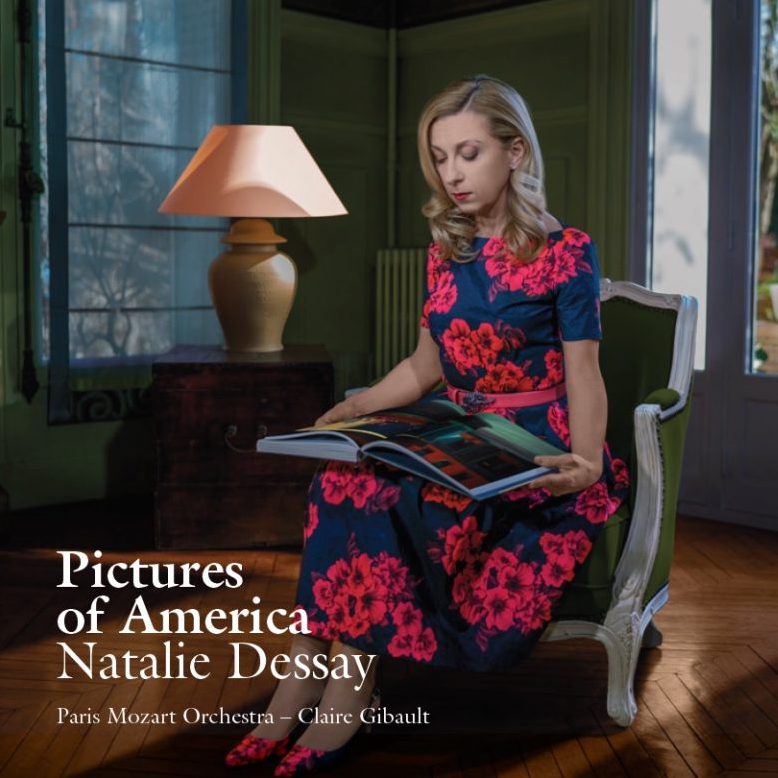
PICTURES OF AMERICA – NATALIE DESSAY

PICTURES OF AMERICA – NATALIE DESSAY

Don Roberts, July 2020

Soprano Natalie Dessay published on 2017 her first Sony CD.  Inspired by the paintings of Edward Hopper, soprano dives herself in the American Songbook, with a series of songs arranged by distinguished jazz musicians.  

The paintings that inspired each song aren’t included in the commercial packaging, so that nothing eclipses the recording itself, which really stands out.  

After a three-year forced pause caused by a vocal surgery back in 2002, Dessay had to adapt her repertoire by doing chansons and musicals. The chanson album “Entre elle et lui” with Michel Legrand from 2013 is now followed by the album “Pictures of America” devoted to the American songbook.  

She says herself in the booklet notes that she worked to “develop a new voice – a deeper and more intimate sound that would whisper into the listener’s ear. It was a voice I had to learn to control, like a small, secretive wild animal.”  

In spite of the changes in her voice, she managed to keep the essence of her brilliant, focused core of sound. Dessay adopts a delicate and subtle sound with a deeper agile voice full of wonder and nuances. The arrangements of these familiar songs are artistic and surprising, including imaginary instrumental interludes that take full advantage of the string textures.  

Her new album demonstrates solemnly that her operatic voice may well be transformed into a musical, and she succeeds satisfactorily in such transformation, without even suspecting which powerful voice is behind this singer.  Being a vastly experienced opera singer, she masters the voice control techniques being able to generate the most refined moods and sound colors to match the atmosphere matching of every respective song. 

Dessay quality of singing is very noticeable. Her English diction on Disc One is admirably clear and comprehensible. The voice, now lower in tone, sounds clean and precise, however sometimes it lacks a bit of strength and energy at the most demanding moments. 

Isolation and sadness rule the general mood of the album, Pictures of America inspired by the Pictures of the American painter Edward Hopper.  However, there is also room for joy and cheerfulness in this excellent recording by Sony where, thanks to the high-resolution technique, not a single detail is lost from the masterly interpretation of the songs by Natalie Dessay. 

With this CD the virtuoso soprano has proven that nothing can stop an innate talent when it comes together with willpower together with hard work and practice. Highly recommended. 

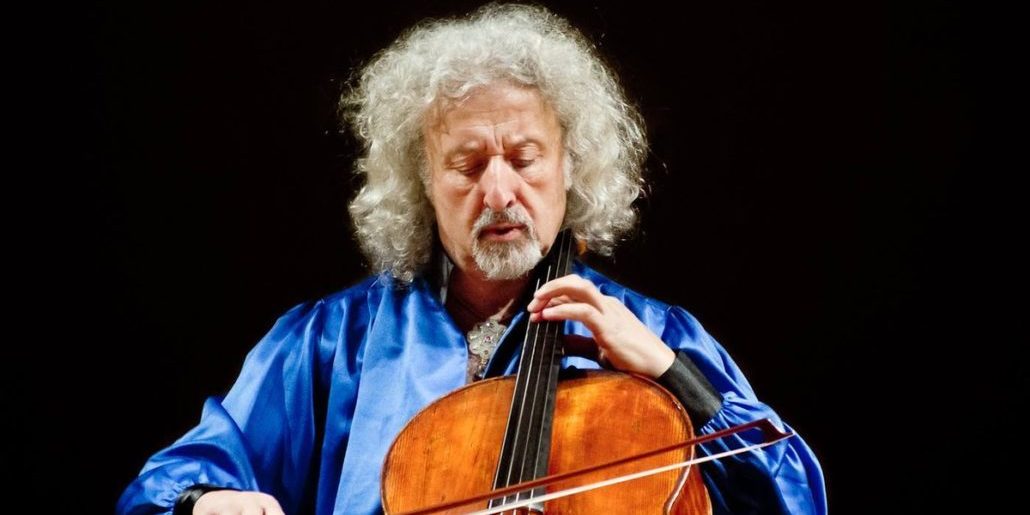
MISCHA MAISKY

MISCHA MAISKY

From dicidence to reference

June 2020

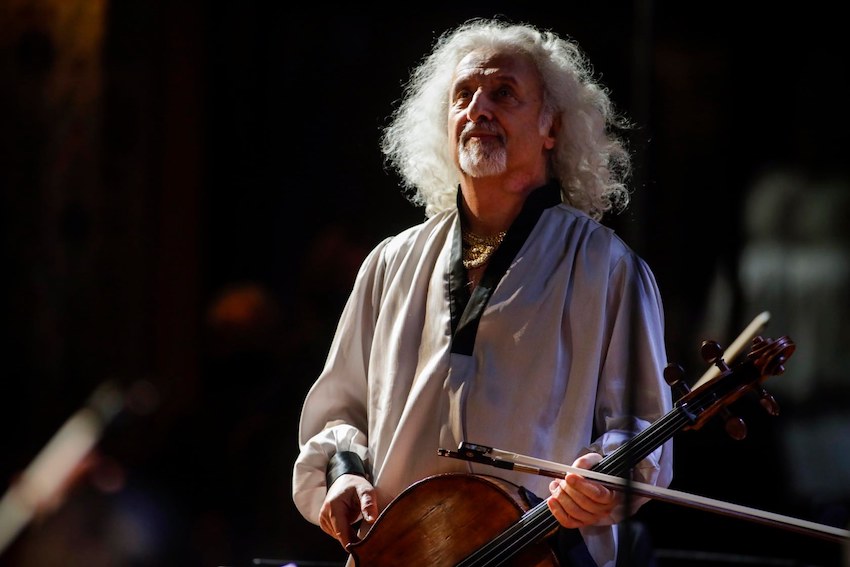
Born in 1948 in Riga, Latvia, Mischa Maisky received his first music lessons there at the Children’s Music School and Conservatory. His older brother Valery was an organist and harpsichordist. Maisky took up the cello at eight and entered the Riga Conservatory. In 1965, he moved to the larger city of Leningrad (now St. Petersburg), and he quickly flourished. He won a national cello competition, performed with the Leningrad Philharmonic – where he earned the nickname “Rostropovich of the Future- and took a prize at Moscow’s International Tchaikovsky Competition.  

He studied with Rostropovich at the Moscow Conservatory while pursuing a concert career throughout the former Soviet Union. After being imprisoned in a labour camp near Gorky for 18 months in 1970,  he emigrated to Israel in 1971, where he holds citizenship. And that was just his “first life,” as he says. 

In his performing and recording career, Mischa Maisky has worked in long-standing partnerships with artists such as the pianists Valery Afanassiev, Martha Argerich, Vladimir Ashkenazy, Hélène Grimaud;  the violinists Janine Jansen, Gidon Kremer, Julian Rachlin,  and the conductors Vladimir Ashkenazy, Daniel Barenboim, Leonard Bernstein,  Zubin Mehta,  and many others. Maisky’s friendship with Martha Argerich has led to many performances together, such as the world premiere of Rodion Shchedrin’s double concerto Romantic Offering in 2011 in Lucerne, Switzerland. 

As a Deutsche Grammophon artist during the last 25 years, he has made over 50 recordings, including many with such symphony orchestras. Maisky has recorded the major cello repertory for Deutsche Grammophon, issuing new music almost annually, and he has teamed with his daughter, pianist Lily Maisky, for several albums. 

Even if he had gone through difficult moments in the past, he doesn’t regregret it: “Though I didn’t get my diploma at the Moscow Conservatory, I did receive a much more complete life education because of my experience. Believe it or not, I actually don’t have any feelings of anger or resentment about my past. I don’t regret anything that has happened to me because I believe that it’s very important to try to find the positive elements in life experiences, even painful ones.” 

Today, Maisky resides in Belgium and considers himself a citizen of the world. “I do live in Europe and feel very European,”. “I play an Italian cello with French bows and German strings. I drive a Japanese car and wear a Swiss watch and Indian necklace. My first wife was American, my second beautiful wife is Italian. And by chance, all four of my children were born in four different countries. I always say I feel at home wherever people enjoy great classical music.” Said the artist during an interview in WQXR. 

6 PARTITAS – HILARY HAHN

6 PARTITAS – HILARY HAHN

Sarah Dunlop, May 2020

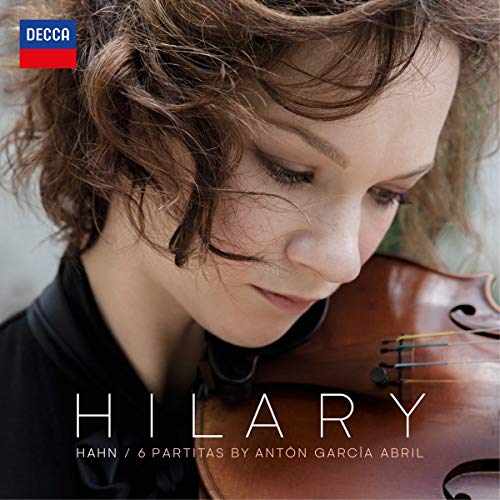
In May 2019 Hilary Hahn’s repertoire was enlarged with her commission to Antón García Abril of a series of new compositions for her latest album, published under Decca Records.  

García Abril has followed in the footsteps of great composers such as Bach, Ysaÿe and Ernst in writing these pieces, six movements that take their names from the acronym for Hilary: Heart, Immensity, Love, Art, Reflective and You. Being a great admirer of the Spanish composer, Hahn encouraged the composition of these pieces and premiered them between 2016 and 2017. Since then, she has performed them all over the world. 

Winner of three Grammy Awards, the violinist Hilary Hahn stands out for her virtuosity, the quality of her performances and her choice of repertoire. Her approach to the new creation and the active role that she plays in the diffusion of music and around her own experiences have made Hahn one of the favorite artists of the public. 

The six pieces collect a work passionate but very measured on each step and each note. The composer’s extensive experience and his undeniable talent was brought to the service of the demands of a performer with a prodigious technique and outstanding artistic sensitivity. The suggestive titles for each of the pieces, whose first initials form the name of the violinist-Hilary- denotes the master’s very personal dedication to the phenomenal violinist. 

Through this recording Hilary Hahn enchants the listeners with the crystalline sound of her violin, her inspired expressive vehemence and her immaculate technique. Her interpretation is passionate and dazzling, recreated in a never empty virtuosity, loaded with penetrating melodism that invades the listener and deeply moves them. 

“Every note somehow feels dedicated to me,” Hilary wrote in her blog. “The phrasings that I’ve never encountered before, that he imagined me playing, feel like they were meant for me to interpret. When I play them, I feel like they are significant. They’re beautiful, expressive, mercurial, colourful, abstract, detailed, dancing, impetuous and full of motion and emotion.” 

We are in front of a highly recommended album that combines the tradition of the solo violin with the new compositional techniques inspired on Hilary. 

BEETHOVEN TRIPLE CONCERTO – ANNE-SOPHIE MUTTER • YO-YO MA • DANIEL BARENBOIM

BEETHOVEN TRIPLE CONCERTO – ANNE-SOPHIE MUTTER • YO-YO MA • DANIEL BARENBOIM

Barbara Clark, May 2020

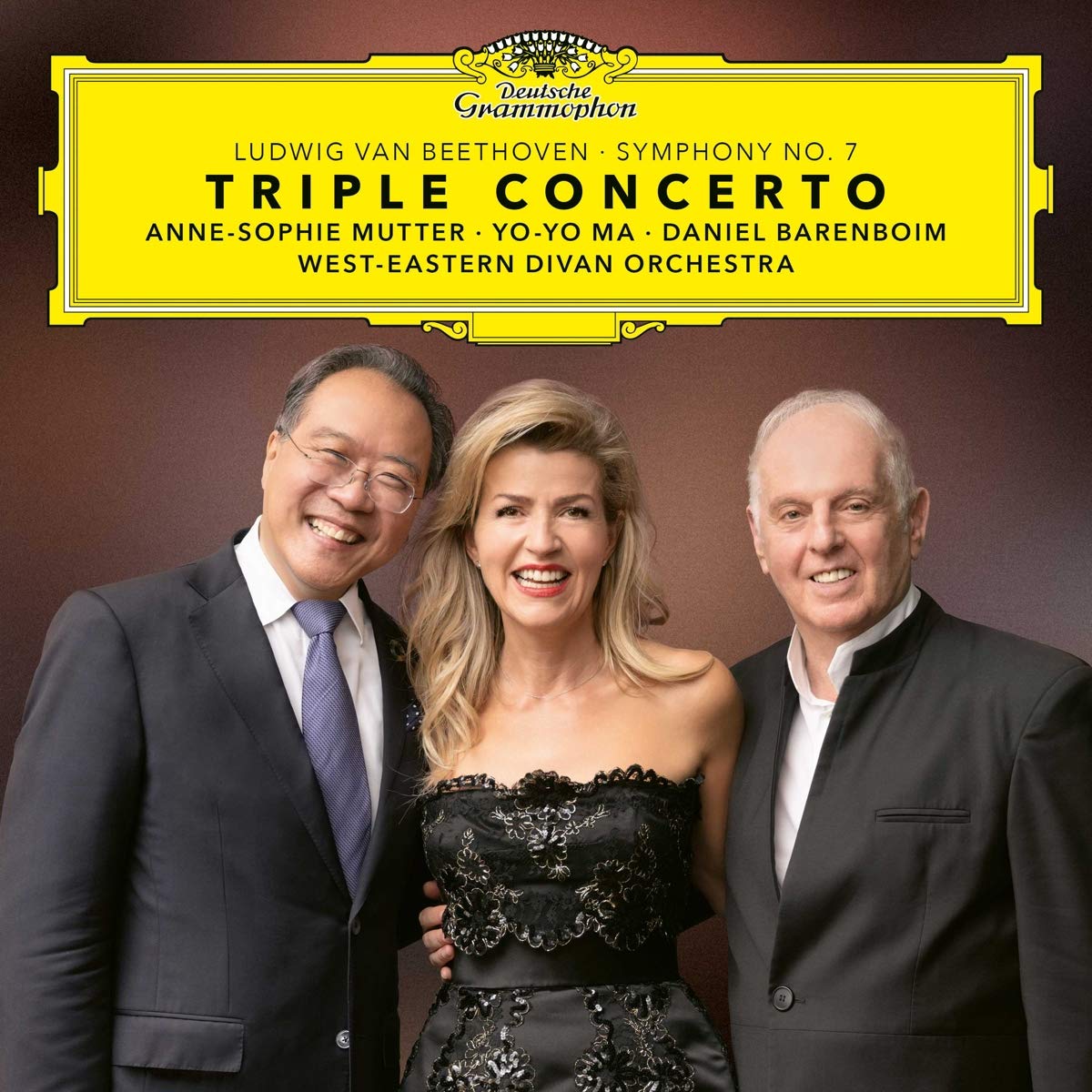
This fantastic album brings together three performers: the fabulous German violinist Anne-Sophie Mutter, the distinguished French-American cellist Yo-Yo Ma and the Argentine maestro Daniel Barenboim. The album was recorded in live sessions held at the Kirchner Cultural Center in Buenos Aires and at the Philharmonie hall in Berlin.  

This recording is a triple celebration because it celebrates the 250 years of Beethoven, the 20 years of the West-Eastern Divan Orchestra and the 40 years since the historic recording made by Anne-Sophie Mutter and Yo -Yo Ma with Herbert von Karajan.  

It is a fascinating album, full of astonishment, revelations and discoveries.  

Yo-Yo Ma had already performed another version of the Triple Concerto with Daniel Barenboim: in 1995, Itzhak Perlman on violin and Barenboim conducting the Berlin Philharmonic from the piano. Once again he sits in front of the Barenboim keyboard and from there now conducts the Orchestra that he founded 20 years ago with the Palestinian philosopher Edward Said, the West-Eastern Divan Orchestra.  

Just from the orchestral introduction of the Triple Concerto, we can already foresee an exceptional performance by the orchestra, masterfully leaded by Barenboim from the piano carried with momentum and confidence, marking the rhythms with intensity and giving flexibility to the tuttis.  Yo-Yo Ma’s entrance is brilliant, empowering the cello with charming warmth. The magic is completed by the vigorous dialogue between the cello and Mutter’s violin, which is greatly supported from the piano by Barenboim’s interpretations, always cautious but of unparalleled musical delicacy and sophistication.  

These three colossal artists achieve the excellence of chamber music with large lyrics, high technical skills in the extreme movements and absolute accomplishment in the subtle link to the second movement, where we once again enjoy the admirable opening by Ma.  

Daniel Barenboim’s readings prove his deep understanding of Beethoven’s compositions; the veteran conductor leads us to see the great truth in Beethoven’s music. The clear interpretation together with orchestra’s filling, which sounds like one of the greats, is very rewarding. It is precise and has nothing to spare or lack in a performance that shows the excellent level of the orchestra’s young members.  

We are dealing with a masterful version that will fully satisfy your expectations on their protagonists and that, with a combination of veteran and youth, achieve a Beethoven in its purest form.

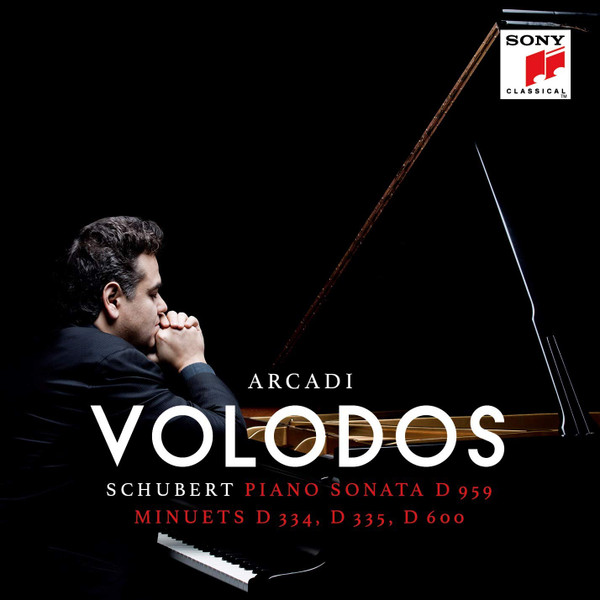
SCHUBERT PIANO SONATA D.959 – ARCADI VOLODOS

SCHUBERT PIANO SONATA D.959 – ARCADI VOLODOS

Richard Phillips, May 2020

The Russian pianist Arcadi Volodos returns to record music by Schubert (1797-1828) after the great success he achieved 17 years ago. The new album includes the powerful “Piano Sonata No. 20 D 959”, a piece he no longer plays live, and is completed with a series of minuets by Schubert himself (D334, D335 and D600). 

All the intensity of the work is clearly focused in the second movement, an Andantino in F sharp minor. He made it the main center, the raison d’être of the entire composition. He continues with an ethereal scherzo and ends with a controlled and eloquent allegretto. But already in the initial allegro something had happened. Volodos approaches that initial allegro with the exquisiteness of chamber music. The hands of the old keyboard master, his famous pyrotechnic virtuosism are astonishingly exposed. 

Here Schubert deceives us. And he chooses an unexpected theme for his musical display. A brief motif barely outlined at the end of the exhibition. The melody aspires to become a song, in the right hand, with the typical accompaniment of a lied, in the left. He strives to add light to it, and even he chooses to place it in the lowest and darkest register of the instrument. But suddenly Volodos shows us the solution. And we hear it heading towards a surprising punchline, in the shape of a ninth chord. A melancholic tune in C minor that, in his hands, moves us to tears. Schubert repeats it with the same result, but now from the key of A minor.  

After such riches, the inclusion of another sonata would have unfavorable the three more rarely performed Minuets that complete the recording are elegant and reveal the Schubert’s transformation from his youth years to his matured self. A pleasing makeweight but in no sense negligible. They are mostly slowly and sensitively played here, as if to emphasize their affinity with the preceding sonata; however, the opulent pace of the opening and conclusion of D.600 is pure Bach. 
 
This CD will surely be included in the collection of every devotee of Schubert’s piano music. 

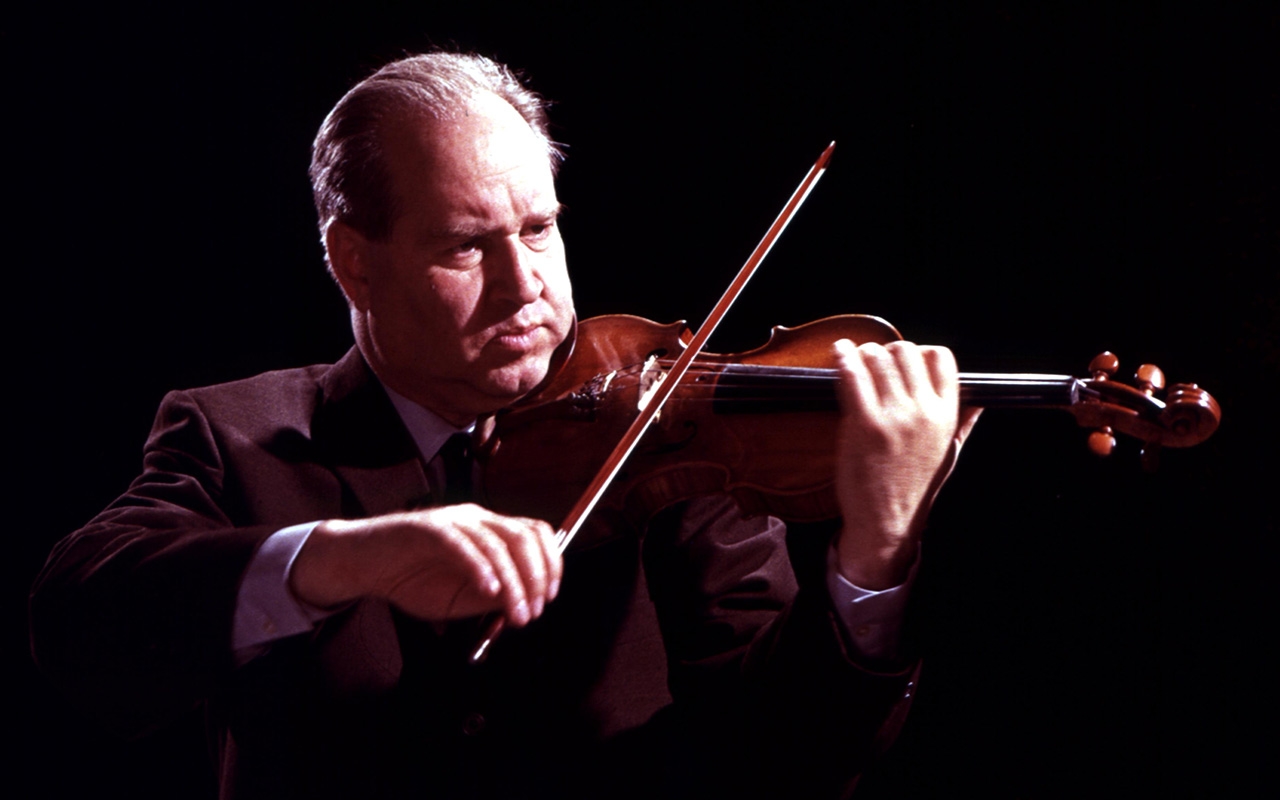
DAVID OISTRAKH

DAVID OISTRAKH

The violin icon

May 2020

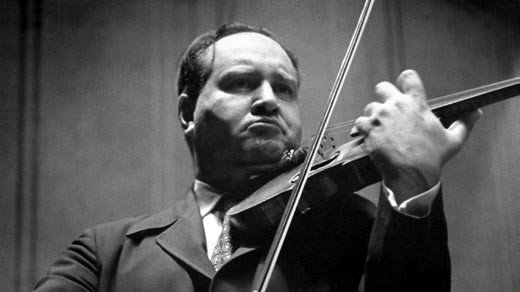
If there is a 20th century violinist who is at the height of Jascha Heifetz and the other great players in the history of the instrument, this was the Russian David Oistrakh. 

Oistrakh was born in 1908 in the city of Odessa, what is currently Ukraine. Being born in a Jewish family, he was one of the few musicians who did not emigrate with the disappearance of the Russian Empire and the later establishment of the Soviet Union in 1917. Therefore he is considered one of the greatest heroes of the former communist country culture. 

His father who was an amateur violinist passed his passion to his son from a very early age. He nurtured his love for the instrument as well as traditional klezmer music, which would influence in his style for the following decades.  

Oistrakh studied with the famous music educator Pyotr Stolyarsky, who also was in charge of the education of other great violinists of his generation, such as Nathan Milstein or Elizaveta Gilels, with whom Oistrakh would create tight friendship bonds. At the same time, Stolyarsky was the one who encouraged him in the practice of his long legato, a technique that Oistrakh came to master like few in history and for which he is still recognized today. 

Aram Khachaturian and Sergei Prokofiev are only two examples of the great conductors and composers of the Soviet period with who he performed during his long career. He traveled extensively throughout the communist bloc and even to many western European countries, including France, Belgium, and the United Kingdom. He received multiple awards, including the possibly highest award from the Soviet Union, the celebrated Lenin Prize. 

For him cancelling a concert had never been an option.  After all, people have bought tickets, came to the meeting and the meeting at any cost is to be held! 

As many of his fellow countrymen, he was a fan of jokes, enthusiastically played chess and tennis and he loved fiction, art and history books. He was a caring man and always had found time to write a letter to his friends. 

David Oistrakh died of cardiac arrest in 1974 in Amsterdam. He today he is considered one of the most important violinists in history. 

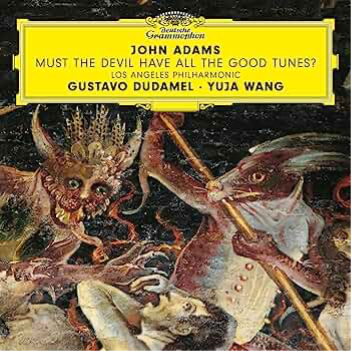
MUST THE DEVIL HAVE ALL THE GOOD TUNES?

MUST THE DEVIL HAVE ALL THE GOOD TUNES?

Mark Jordan, April 2020

In John Adams’ intriguing composition, “Must the Devil Have All the Good Tunes?,” the devil emerges as an unlikely yet captivating muse, inspiring a musical exploration of devilish solos and irresistible melodies. With this Deutsche Grammophon recording, the talented Yuja Wang joins forces with the Los Angeles Philharmonic, conducted by Gustavo Dudamel, to deliver a performance that is both thought-provoking and toe-tapping.

The title of the piece alludes to an 18th-century notion that non-secular music was irreligious, highlighting the historical connection between music and the devil. In Adams’ work, this connection takes shape as devilish solos intertwine with melodies that beckon listeners to move to the rhythm. The composition cleverly weaves together these contrasting elements, resulting in a piece that challenges traditional notions of music’s role and significance.

Recorded in 2019 during a performance in LA, this rendition captures the essence of the work’s premiere, where Dudamel, Wang, and the Los Angeles Philharmonic collaborated to bring Adams’ vision to life. Wang’s prowess as a pianist shines brightly, skillfully navigating the devilish solos while infusing the melodies with infectious energy. Dudamel’s conducting adds a dynamic layer to the performance, leading the orchestra with precision and bringing out the intricate textures in Adams’ composition.

Alongside “Must the Devil Have All the Good Tunes?,” the album includes “China Gates,” a minimalist gem that further showcases Wang’s artistry. In this meditative and contemplative piece, Wang exhibits a different facet of her talent, delicately conveying the introspective nature of the composition.

Adams’ work serves as a reminder of how composers throughout history have been fascinated by the devil’s allure, infusing their music with elements of mystery and intrigue. Through this enthralling performance, Yuja Wang and the Los Angeles Philharmonic invite audiences to reflect on the interplay between music and mythology, making “Must the Devil Have All the Good Tunes?” a captivating addition to the musical repertoire.

This recording of John Adams’ “Must the Devil Have All the Good Tunes?” featuring Yuja Wang and the Los Angeles Philharmonic is a thought-provoking and musically thrilling experience. With the combination of devilish solos and irresistible melodies, Adams challenges conventions and explores the timeless fascination with the devil’s influence on music. Yuja Wang’s virtuosity and Gustavo Dudamel’s masterful conducting make this album a must-listen for anyone seeking a fresh perspective on contemporary classical music.

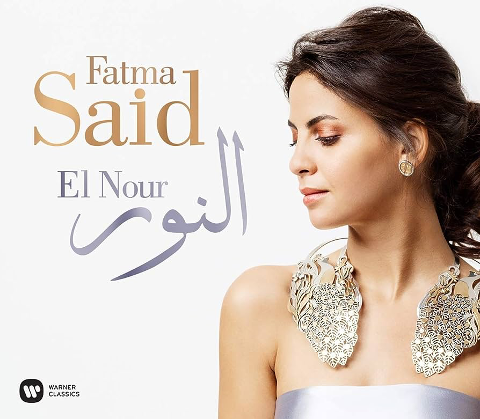
EL NOUR – FATMA SAID

EL NOUR – FATMA SAID

“El Nour” – Fatma Said Illuminates Musical Horizons

Sarah Dunlop, April 2020

Fatma Said’s debut recital album, “El Nour,” is a captivating exploration of cultural intersections and vocal prowess. The CD showcases an array of musical talents and styles, blending the enchanting voice of the Egyptian soprano with masterful accompaniments from a diverse ensemble. Recorded in 2020 at the historic Jesus Christus Kirche in Berlin, Germany, this album presents a unique journey through songs from France, Spain, and Egypt, marked by Said’s distinctively clear and translucent soprano.

The recital opens with Maurice Ravel’s song cycle “Shéhérazade,” delivered in its original piano and voice version. Fatma Said’s exquisite interpretation, under the skillful accompaniment of Malcolm Martineau, offers an intimate portrayal of each piece’s delicate poetry. In “Asie,” the first song of the cycle, Said’s soprano glimmers with a sense of mystery, guided by Martineau’s finely balanced piano performance. The inspired inclusion of a Middle Eastern Ney Flute in “La Flûte Enchantée” adds a layer of cultural authenticity, seamlessly intertwining with Said’s playful yet nuanced delivery.

Throughout the French selections, Said’s vocal finesse shines brightly, evoking emotions ranging from playful flirtation to profound introspection. Her rendition of Berlioz’s “Zaide” stands out for its ability to convey both festive Spanish joy and underlying emotional depth. Said’s connection to the text and her ability to live within each moment of the song lend her performance a remarkable authenticity.

The Spanish segment of the album showcases Said’s versatility and connection to the Hispanic culture. Accompanied by the sensitive guitar playing of Rafael Aguirre, her rendition of Federico García Lorca’s “Sevillana” radiates triumphant energy, while her interpretation of the lullaby exhibits the haunting beauty of her lower register. Comparisons to Victoria de los Angeles are apt, as both artists possess a keen intelligence in their vocal delivery, but Said’s approach, characterized by a more direct and concentrated tone, distinguishes her.

However, what truly sets “El Nour” apart is the inclusion of Egyptian songs, a notable departure from the traditional European repertoire. Said’s collaboration with a jazz quartet in the poignant ballad “Sahar El Layali” offers listeners an entrancing glimpse into contemporary Egyptian music. These songs not only showcase Said’s ability to adapt to diverse musical landscapes but also enrich the album’s global perspective.

The recording quality of the album is exemplary, capturing the intricate details of both voice and instrumentation in the acoustic splendor of the Jesus Christus Kirche. The English translations of the sung texts enclosed with the CD allow listeners to fully engage with the emotional nuances of the songs.

Fatma Said’s “El Nour” illuminates the listening experience with its delicate yet powerful performances. This debut recital album demonstrates her musical depth and range, offering a vibrant mosaic of cultures and emotions. As she navigates effortlessly between languages and styles, listeners are treated to a truly captivating musical journey. With this remarkable introduction, it’s evident that Fatma Said has a promising artistic future ahead, both on record and on the stage.

WIENER STAATSOPER

WIENER STAATSOPER

Enchanting Harmonies: Wiener Staatsoper’s Unforgettable 2023-2024 Season

March 2023

In the heart of Vienna, a grand opera house stands as a remarkable tribute to the world of musical artistry. The Wiener Staatsoper, steeped in a rich history and esteemed legacy, holds a special place in the hearts of music lovers across the globe. It all began on a momentous day, 25th May 1869, when the opera house proudly opened its doors with a breathtaking performance of Mozart’s masterpiece, “Don Juan.” The impact of that unforgettable evening was felt far beyond Vienna, igniting a thrilling journey of musical brilliance that continues to captivate audiences to this day.

Over the years, the Wiener Staatsoper has etched itself into the hearts of music lovers, captivating imaginations, and kindling artistic passion like no other. Its legacy transcends borders, making it a focal point of global admiration. The concerns and achievements of this venerable opera house have sparked public interest unmatched by any other city worldwide.

As the sun rises on a new season, the enchanting city of music eagerly anticipates a stellar year at the Wiener Staatsoper. The opera house recently unveiled its captivating line-up for the 2023-2024 season, promising an enchanting journey through the realm of opera, guided by the talents of extraordinary artists who will leave audiences spellbound.

The season commences with a majestic production of Giacomo Puccini’s revered work, “Il Trittico.” Mezzo-soprano Daria Sushkova takes center stage, gracing the role of “Suor Angelica” with her mesmerizing vocal prowess. From October to February, the melodious notes will fill the air, heralding a glorious start to the year.

In October and November, the resonant bass voice of Evgeny Solodovnikov will reverberate through the opera house as he embarks on the captivating journey of “Manon Lescaut.” The richness of his artistry is sure to captivate the hearts of the audience.

A momentous portrayal awaits in November, as the captivating soprano, Maria Nazarova, embodies the enigmatic character of Amanda in Ligeti’s daring masterpiece, “Le Grand Macabre.” The month also witnesses her return in revivals of beloved operas “La Bohème” and “Guillaume Tell,” enchanting listeners with her ethereal voice.

Stepping into December, the tenor sensation Norbert Ernst takes center stage in a new production of Puccini’s magnum opus, “Turandot,” embodying the spirited Pang. From December to June 2024, his thrilling performances promise a journey of vocal brilliance that is not to be missed.

February 2024 brings a spectacle of talent with Gennady Bezzubenkov, Michael Gniffke, Andrei Popov, Karl Laquit, Elena Vassileva, and Karl Laquit, among others, starring in Damiano Michieletto’s captivating production of “Animal Farm.” The opera world awaits with bated breath for this captivating rendition.

A series of mesmerizing revivals awaits, showcasing the incomparable bass, Adam Palka. In February, he graces the stage as Don Basilio in Rossini’s timeless “Il Barbiere di Siviglia,” enchanting audiences with his commanding presence. In March, he takes on the mystical Vodník in Dvorak’s ethereal “Rusalka,” followed by his captivating portrayal of Mephistopheles in Gounod’s haunting “Faust” in May, a performance that promises to linger in the minds of all who witness it.

March brings the soul-stirring “Eugene Onegin” by Tchaikovsky, a captivating spectacle of emotions and music. The talented Boris Pinkhasovich, Daria Sushkova, and Ilia Kazakov lend their extraordinary voices, creating an unforgettable experience.

In May 2024, the radiant soprano, Caroline Wettergreen, graces the stage in Thomas Adès’ “The Tempest,” a mesmerizing portrayal that promises to leave hearts awash with emotion and wonder.

As the Wiener Staatsoper embarks on this sensational season, we extend our heartfelt congratulations to all the talented artists, whose passion and dedication will bring music to life. In bocca al lupo! Let the music weave its magic, and may each performance be an ode to the splendor of the human spirit and the timeless harmonies that resonate in our souls. As Vienna celebrates this musical symphony, the world awaits with bated breath, ready to embrace the magic of the Wiener Staatsoper.