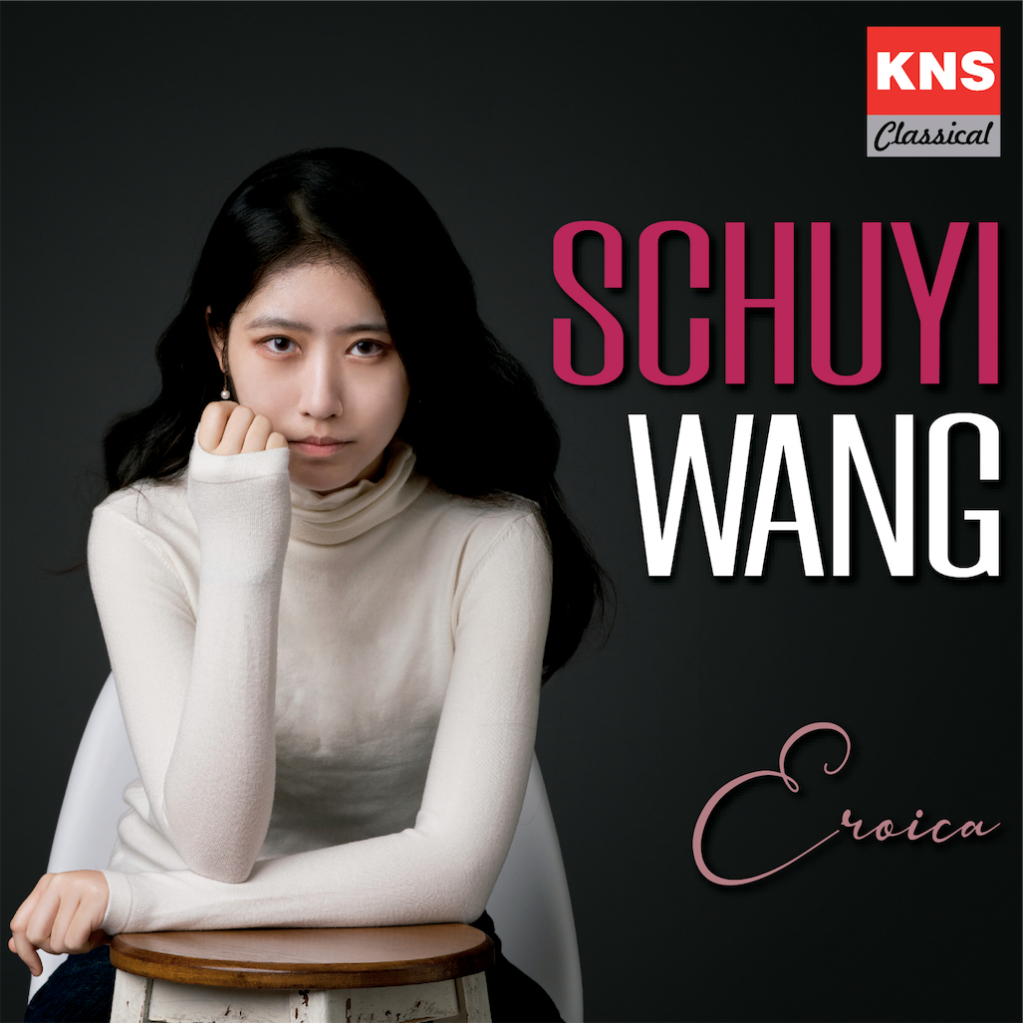
A Young Artist’s Heroic Statement of Identity and Vision
With Eroica, Chinese pianist Schuyi Wang presents a recital program of striking ambition and coherence. Rather than assembling a conventional display of virtuoso repertoire, she shapes a carefully conceived musical journey around the idea of heroism, linking Chopin, Liszt, and Beethoven through a shared expressive horizon. The result is a recital that reveals not only technical command, but a strong sense of artistic direction and narrative thinking.
The program opens with Chopin’s Polonaise in A-flat major, Op. 53, a work whose reputation often encourages rhetorical excess. Wang takes a more architectural approach, emphasizing rhythmic stability and structural clarity. The famous octave passages are delivered with authority but without hardness, while the central lyrical section unfolds with genuine cantabile warmth. Her reading conveys dignity and breadth rather than sheer brilliance, allowing the work’s noble character to emerge naturally.
Liszt’s Réminiscences de Norma introduces a different dimension of her artistry. Instead of treating the piece as a virtuosic paraphrase in the superficial sense, Wang approaches it as a dramatic narrative inspired by operatic transformation. She shapes the vocal lines with sensitivity and maintains continuity across Liszt’s episodic structure, ensuring that the work develops with purpose rather than appearing as a sequence of contrasts. The result is a performance that balances theatrical flair with musical coherence.
At the emotional center of the recital stands Vallée d’Obermann, one of Liszt’s most introspective and philosophically searching works. Wang’s interpretation is notable for its patience and long-range vision. The opening pages unfold with restraint, allowing the music’s existential questioning to grow organically. As tension accumulates, she builds toward the climactic passages with carefully controlled momentum. Her command of tonal color is especially persuasive here, revealing a natural affinity for Liszt’s poetic language.
Beethoven’s Variations and Fugue in E-flat major, Op. 35, known as the Eroica Variations, provides a fitting conclusion to the program. This work demands clarity of character across a wide range of variation types, from humor to austerity to contrapuntal rigor. Wang responds with a reading that highlights the experimental imagination at the heart of Beethoven’s writing. The fugue demonstrates particularly strong structural awareness and rhythmic precision, bringing the recital to a conclusion that feels both logical and convincing.
Throughout the album, what emerges most clearly is Wang’s sense of musical architecture. The program unfolds as a continuous expressive trajectory rather than a sequence of independent showpieces. Her tone remains warm and focused across dynamic extremes, and her phrasing in lyrical passages reflects a convincingly vocal conception of sound. At the same time, she shows a notable ability to sustain large-scale structures, an essential quality in repertoire of this scope.
Still at an early stage of her international career, Schuyi Wang already demonstrates a combination of virtuosity, sensitivity, and interpretative intelligence that suggests a distinctive artistic voice in formation. Eroica captures a pianist whose vibrant musical personality communicates directly to the listener, offering a recital that is both thoughtfully constructed and compellingly performed.