REFLECTIONS – DUDOK QUARTET

REFLECTIONS – DUDOK QUARTET

Resilient Harmonies: Reflections on Bacewicz and Shostakovich by Dudok Quartet Amsterdam

Richard Phillips, November 2022

The Dudok Quartet Amsterdam’s release, “Reflections,” offers a compelling exploration of two string quartets composed in the early 1950s, a tumultuous period marked by the oppressive shadow of Stalinism. This warmly recorded album presents Grażyna Bacewicz’s Fourth Quartet and Dmitri Shostakovich’s Fifth, shedding light on the emotional turmoil and creative resilience of the era.

Bacewicz’s Fourth Quartet immediately engages the listener with its outgoing demeanor, especially in the lively and spirited finale. Yet, lurking beneath its exuberance are unsettling shades, particularly evident in the first movement. The Dudok Quartet skillfully navigates the intricate emotional landscape, vividly conveying the haunting folk-like melody accompanied by enigmatic tremolos that evoke a sense of desolation and solitude. The quartet’s rendering of Bacewicz’s work is rhythmically dynamic and finely nuanced, capturing the contrasting moods and textures of the composition.

Shostakovich’s Fifth Quartet, another product of the era, presents its own emotional challenges. The Dudok Quartet’s interpretation is a testament to their prowess, delivering a performance that alternates between tremendous power and ferocity, particularly in the outer movements, and moments of poignant introspection, as seen in the central Andante. The slow movement is rendered with eerie precision, creating an atmosphere of unsettling beauty. The quartet expertly navigates the fragile closing bars, leaving a lasting impression of vulnerability and delicacy.

In terms of tempo, the Dudok Quartet’s interpretation of the Shostakovich’s first movement differs slightly from the composer’s Allegro non troppo marking. While their approach infuses the music with urgency and momentum, some listeners might find the Artemis Quartet’s more deliberate tempo on their Warner recording to create a more cumulative symphonic impact during the development section.

However, the Dudok Quartet’s technical prowess and artistry remain undisputed throughout the album. Notably, their arrangements of a selection of Shostakovich’s 24 Preludes showcase their brilliance and ingenuity. Successfully translating the inherently pianistic nature of the preludes into the quartet medium is no small feat, and the Dudok Quartet deserves special commendation for their idiomatic and engaging renditions.

“Reflections” by the Dudok Quartet Amsterdam on the Rubicon label is a thought-provoking musical exploration, delving into the depths of emotion and resilience during a challenging period in history. The quartet’s skillful navigation of Bacewicz’s and Shostakovich’s compositions, along with their inventive arrangements, make for a deeply engaging listening experience that invites contemplation on the profound impact of music in times of adversity.

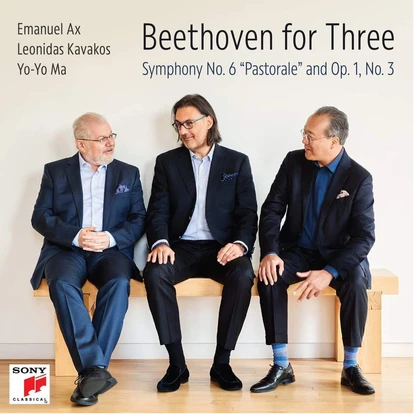
BEETHOVEN FOR THREE – EMANUEL AX / LEONIDAS KAVAKOS / YO-YO MA

BEETHOVEN FOR THREE – EMANUEL AX / LEONIDAS KAVAKOS / YO-YO MA

Beethoven for Three, Vol. 2 – A Spirited Exploration of Beethoven’s Masterpieces

Richard Phillips, November 2022

The trio of world-renowned virtuosos – Yo-Yo Ma on cello, Leonidas Kavakos on violin, and Emanuel Ax on piano – return with “Beethoven for Three, Vol. 2,” a captivating album that delves into Beethoven’s Symphony No. 6 (arr. Wosner) and Piano Trio No. 3, Op. 1/3. Building on their previous successes, this collection takes the listener on a vibrant journey through two distinct compositions, demonstrating the ensemble’s mastery and artistic insight.

The album opens with an ambitious rendition of Beethoven’s “Symphony No. 6,” affectionately known as the ‘Pastoral.’ The trio’s interpretation sheds new light on this well-known orchestral work, presenting it in an intimate and chamber music setting. While the transformation of such a grand symphony into a trio arrangement is a commendable endeavor, the execution reveals a mix of successes and challenges. The first movement is marked by a meticulous attention to pedal points and repetitions, though at times the subtleties of texture and sustained lines, particularly in the ‘Scene by the Brook,’ feel slightly elusive. The ‘Storm’ movement, while carrying the intended intensity, occasionally verges on becoming overloaded and strenuous, possibly affecting the balance between instruments.

In the ‘Shepherds’ Thanksgiving,’ the trio grapples with tempo inconsistencies, which slightly diminish the intended breadth and nobility of the music. Here, the performers’ interpretation perhaps slightly inhibits the piece’s potential impact, while the climax could have benefited from a more substantial weight, as the arranger’s decisions play a role in shaping this aspect of the performance.

The true revelation on this album comes with Beethoven’s Piano Trio No. 3, Op. 1/3. The ensemble’s thoughtful exploration of this composition showcases a harmonious blend of Ma, Kavakos, and Ax’s individual virtuosity. The trio displays an impressive command over their instruments, thoughtfully navigating the musical material while allowing Beethoven’s genius to shine through. The balance achieved between the instruments is particularly noteworthy, with each musician contributing their unique voice to create a unified and enchanting performance. Vibrato, a key expressive element, is employed thoughtfully, adding depth and dimension to the piece, showcasing the artists’ keen understanding of Beethoven’s intentions.

Emanuel Ax’s piano work in the Piano Trio No. 3 is a highlight of the album. Liberated from the challenges presented in the ‘Pastoral’ arrangement, Ax delivers trills and passagework with effortless sparkle, infusing the outer movements with vivacity and brilliance. The Andante’s variations provide a platform for delicate characterizations from all three musicians, showcasing their musical synergy. The Minuet radiates charm, contributing to a well-rounded and deeply satisfying rendition of this trio.

In “Beethoven for Three, Vol. 2,” Yo-Yo Ma, Leonidas Kavakos, and Emanuel Ax continue to demonstrate their remarkable musicianship and dedication to exploring Beethoven’s compositions from fresh perspectives. While the trio’s interpretation of the ‘Pastoral’ symphony might not consistently capture all the nuances of the orchestral original, their captivating performance of the Piano Trio No. 3 stands as a testament to their profound understanding of Beethoven’s artistry. This album is a fine addition to the ensemble’s discography, offering listeners a unique opportunity to experience Beethoven’s music in an intimate and engaging manner.

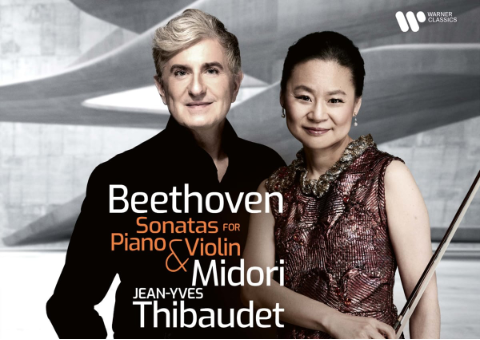
BEETHOVEN SONATAS FOR PIANO & VIOLIN – MIDORI & JEAN-YVES THIBAUDET

BEETHOVEN SONATAS FOR PIANO & VIOLIN – MIDORI & JEAN-YVES THIBAUDET

“Harmonious Brilliance: Midori and Thibaudet’s Remarkable Beethoven Sonata Collection”

Don Roberts, November 2022

In their latest release, “Beethoven – Complete Violin Sonatas,” the extraordinary collaboration between Midori and Jean-Yves Thibaudet sets a new standard for interpreting these iconic works. This ambitious project marks the violinist’s illustrious career and commemorates her 40th anniversary as a professional musician. Despite being relatively new artistic partners, their chemistry shines through, creating an awe-inspiring musical journey that captivates from the very first note.

Right from the outset, the duo’s rendition of the “Spring Sonata” (No. 5) captivates with its poetic expression and impeccable attention to detail. Midori’s delicately nuanced dynamics and Thibaudet’s expert piano accompaniment weave a mesmerizing narrative. While some may favor a more overt vibrato, the duo’s decision to keep it subtle adds a layer of authenticity and intimacy to the performance. The jubilant second theme exudes an infectious energy, leaving the listener craving for more of this joyous vitality.

In the second movement, their interpretation shines with a perfect balance of simplicity and lyricism. The violin and piano communicate seamlessly, creating a musical conversation that reveals the depth of Beethoven’s genius. The Scherzo brims with delightful levity, and both artists display exceptional command, particularly evident in the thrilling staccato runs. The final Rondo, though brisk, showcases Midori’s ability to infuse the violin’s theme with a delicate nostalgia, making it an unforgettable moment in the sonata.

Turning to the No. 8 G Major Sonata, Midori and Thibaudet’s performance is nothing short of enchanting. Their collaborative brilliance comes to the forefront as they navigate through the contrasting themes with unmatched precision. Thibaudet’s pianism adds a delightful suaveness to the opening, while Midori’s violin soars with expressive phrasing and impeccable intonation. The Allegro Vivace brims with vivacity and charm, exuding a lightheartedness that sweeps the listener off their feet. This new rendition not only retains the excitement of their previous live performance but also adds a polished finesse that elevates the interpretation to new heights.

In the Kreutzer Sonata (No. 9), Midori’s technical prowess shines brilliantly, particularly in the opening with her flawless double stops. Her profound sense of contemplation imbues the solo passages with a captivating depth, setting this performance apart from others. Thibaudet’s piano, though somewhat restrained in color changes, compensates with a clarity and precision that complements Midori’s artistry perfectly. The presto section unleashes a torrent of urgency and ferocity, leaving the listener breathless, thanks to Thibaudet’s clever omission of the pedal, which adds a stark intensity to the fast runs. The F major Andante reveals yet another facet of their brilliance, with Thibaudet’s sprightly trills and Midori’s fluid passages painting an evocative picture of graceful melancholy.

The sound engineering and violin-piano balance are commendable, offering a warm and intimate listening experience that draws the audience into the heart of the performance. William Meredith’s liner notes provide valuable insights into the historical context and musical nuances of each sonata, enhancing the overall appreciation of the album.

Midori and Thibaudet’s “Beethoven – Complete Violin Sonatas” is a tour de force of musical artistry. Their interpretation showcases an unrivaled synergy that brings fresh perspectives to these timeless masterpieces. Whether you’re a devoted Beethoven enthusiast or a newcomer to classical music, this album is a must-have addition to your collection, as it redefines the boundaries of violin-piano collaborations and sets a new standard for interpreting Beethoven’s beloved sonatas.

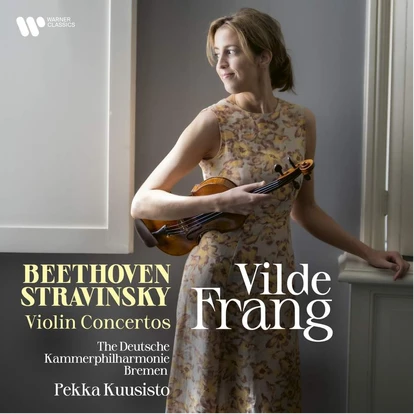
BEETHOVEN • STRAVINSKI VIOLIN CONCERTOS – VILDRE FRANG

BEETHOVEN • STRAVINSKI VIOLIN CONCERTOS – VILDRE FRANG

Beethoven • Stravinsky – Vilde Frang’s Dynamic Interpretation

Barbara Clark, October 2022

Vilde Frang’s recent release on Warner Classics, featuring Beethoven’s Violin Concerto and Stravinsky’s Violin Concerto, presents a thought-provoking union of two distinct musical worlds. Frang’s collaboration with the Deutsche Kammerphilharmonie Bremen, under the direction of Pekka Kuusisto, breathes new vitality into these compositions, highlighting their shared penchant for dialogic interplay and animated exchange.

The unlikely pairing of Beethoven and Stravinsky initially raises eyebrows, but Frang’s decision to approach these works on a chamber scale yields a fresh perspective that invigorates their inherent qualities. Through Frang’s impeccable tonal nuances and skillful dynamic range, she seamlessly intertwines with the orchestra’s meticulously graded textures. This synergy amplifies the symphonic essence of the Beethoven concerto, defying the constraints of the ensemble’s modest size. Notably, Frang’s performance of the slow movement encapsulates a poignant moment, accentuating the significance of the radiant third theme.

A striking addition to the recording is Frang’s incorporation of her transcriptions of Beethoven’s cadenzas for the later piano version of the concerto, complete with timpani. This inclusion provides a unique lens into Beethoven’s creative choices and adds an authentic touch to the performance.

The true highlight of the album emerges in Frang’s interpretation of Stravinsky’s Violin Concerto. Together with the orchestra, she masterfully navigates the brisk tempo and intricate rhythms of the outer movements, infusing them with an animated balletic quality. The precise timing and delicate responses of both Frang and the orchestra unveil the ingenious orchestration of Stravinsky’s work, resulting in a vibrant and exhilarating sonic experience.

The third movement, titled “Aria II,” ushers in an unexpected shift in mood, delving into a realm of somber introspection. Frang and the orchestra successfully convey a tangible sense of anguish and unease, showcasing her artistic versatility and ability to convey a spectrum of emotions through her violin.

“Beethoven • Stravinsky” clearly shows Vilde Frang’s exceptional musicianship and her skill in breathing new life into well-established compositions. Through her collaboration with the Deutsche Kammerphilharmonie Bremen, these works transcend traditional boundaries, revealing an intricate web of dialogue and exchange intrinsic to the music itself. From Beethoven’s symphonic grandeur to Stravinsky’s kinetic energy, Frang and the ensemble offer a dynamic exploration that leaves a lasting impact. This recording marks another milestone in Frang’s illustrious career and is a must-listen for enthusiasts of classical music.

SYDNEY OPERA HOUSE

SYDNEY OPERA HOUSE

A Beacon of Artistry and Innovation

October 2022

Nestled in Sydney, Australia, the Sydney Opera House stands as a multifaceted performing arts complex. This architectural marvel seamlessly weaves together both ancient and modern influences, resulting in the sculpted grace that has solidified the Opera House as an emblematic edifice of the 20th century. It has come to symbolize boundless imagination and ingenuity.

Back in February 1966, Jorn Utzon stepped down from his role as the architect behind the Sydney Opera House. His design had triumphed in an international competition nearly a decade prior, back in 1957. However, due to a series of challenging incidents and debates, he was replaced by a group of local architects. The primary contention arose from authorities’ concerns about the escalating costs. The project had already consumed $20 million, surpassing the initial budget of $7.5 million. The final cost ended up being six times the original estimate.

Conceived with the intention of “cultivating a more enlightened and improved community,” the Sydney Opera House has stood as a hub for world-class artists, performances, and discourse since its inauguration in 1973. It has been a gathering point for both local and global matters of significance. Presently, it ranks among the world’s most bustling performing arts centers, attracting over 8.2 million visitors each year on 363 days.

Jorn Utzon’s remarkable contribution to architecture was acknowledged with the Pritzker Prize in 2003, often dubbed the architectural counterpart of the Nobel Prize. He passed away in 2008. Designated as a UNESCO World Heritage Site in 2007, the Opera House has solidified its position as a pivotal representation of modern architectural achievement.

Encompassing its premises are seven distinct venues catering to performances and events of varying scales. These range from the expansive Concert Hall, accommodating 2,679 patrons, to the intimate Utzon Hall with a capacity for 210 attendees. An average week witnesses around 40 acts, concerts, events, or performances within the Opera House’s walls. The grand Concert Hall houses the world’s largest mechanical musical instrument—a colossal organ featuring over 10,000 pipes, a decade in the making.

The Opera House serves as the residency for seven renowned performing arts troupes: Opera Australia, Sydney Symphony Orchestra, Australian Chamber Orchestra, Sydney Theatre Company, The Australian Ballet, Bell Shakespeare, and Bangarra Dance Theatre.

In celebration of its 45th anniversary in 2018, coinciding with architect Jørn Utzon’s centenary, the Opera House undertook a series of revitalization projects aimed at preserving the site for future generations of artists, audiences, and visitors. As part of this restoration endeavor, the Opera House is dedicated to infusing every facet of its existence with the same visionary essence that sparked its inception.

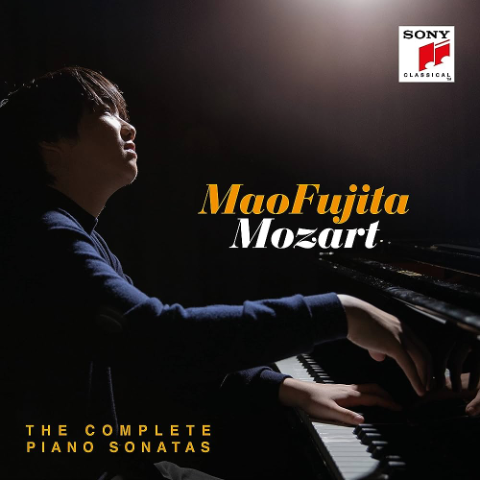
MOZART. THE COMPLETE PIANO SONATAS – MAO FUJITA

MOZART. THE COMPLETE PIANO SONATAS – MAO FUJITA

Mao Fujita – Revelations of Mozart’s Complete Piano Sonatas

Mark Jordan, October 2022

Mao Fujita, the prodigious 22-year-old pianist, embarks on a breathtaking musical adventure with Mozart’s complete piano sonatas in this captivating release by Sony Classical. As Fujita made his much-anticipated debut at the Verbier Festival in 2021, he fearlessly took on the monumental task of presenting five recitals solely dedicated to Mozart’s timeless compositions. Now, this remarkable journey finds its culmination in a studio recording that leaves listeners spellbound.

Throughout the album, Fujita’s unflappable mastery and profound understanding of Mozart’s language become apparent. The young pianist navigates the intricacies of each sonata with a seemingly effortless grace, delivering performances that exude nuance, expressiveness, and sheer joy in music-making.

In the C major K. 279, Fujita delights with his crisply delineated right-hand passagework, imbuing the Allegro with a sense of playfulness and exuberance. The B-flat K. 281 is equally enthralling, as the pianist effortlessly handles the ornamentation, infusing the music with delightful colors and nuances.

One of the highlights of the album is the D major “Dürnitz” sonata K. 284, particularly its extensive Theme and Variations. Fujita’s wide range of tempo changes creates a sense of unity and coherence, showcasing his interpretative brilliance. In the A minor K. 310, the pianist’s emotional depth shines through, as he skillfully balances dynamic unanimity in both hands, allowing the left-hand chords to provide a strong foundation for the dramatic first movement.

Fujita’s sensitivity to voice leading and controlled reserve in the C minor K. 457’s finale is commendable, compensating for a relatively lighter first movement. His rendition of the F major K. 332 surprises with a comfortable tempo that emphasizes the music’s rich melodic core, rather than flashy virtuosity, resulting in a refreshing and profound interpretation.

The album’s second half presents the F major K. 533/494 sonata, where Fujita’s playing evolves with a touch of emotional depth and a refined Rondo finale. The C major K. 330, B-flat K. 333, and D major K. 576 outer movements are performed with poise, control, and a measured approach, adding an intimate and introspective quality to these works.

Mao Fujita’s mastery over Mozart’s piano sonatas is awe-inspiring, and his interpretation stands strong among established reference versions. With a mesmerizing blend of technical prowess and artistic sensitivity, Fujita’s captivating journey into Mozart’s sonic universe is a must-listen for any classical music enthusiast.

As we witness the blossoming of this young artist’s career, one cannot help but eagerly anticipate the future endeavors that will undoubtedly showcase more of Mao Fujita’s exceptional talent and artistry. This album is a testament to the musical brilliance of a rising star in the classical music world.

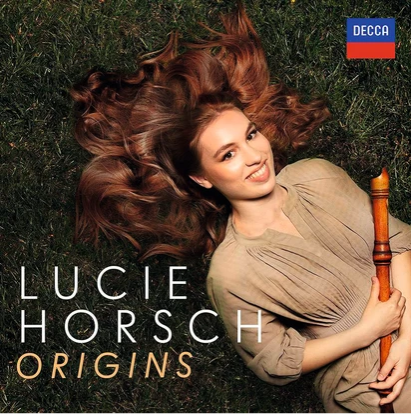
ORIGINS – LUCIE HORSCH

ORIGINS – LUCIE HORSCH

Origins – A Remarkable Exploration of Musical Diversity

Sarah Dunlop, October 2022

Lucie Horsch’s latest offering, “Origins,” is an exceptional demonstration of the recorder’s adaptability, showcasing the instrument’s range and versatility across an array of musical styles. This third release under the Decca label adds to Horsch’s reputation as a boundary-pushing musician, recalling the innovative approach of Michala Petri during her years with Philips.

Recorded in the renowned studios of Hilversum’s Muziekcentrum, the album takes listeners on a captivating sonic expedition, delving into the transformations and reinterpretations of musical compositions across time. Horsch’s skillful artistry and technical finesse elevate these transcriptions beyond mere adaptations, urging us to reconsider familiar pieces through a fresh lens.

Throughout “Origins,” Horsch masterfully maneuvers through a rich tapestry of musical expressions. From Bartók’s “Romanian Folk Dances” to the resonant tones of “Hungarian Folksongs from Csik,” her collaboration with the cimbalom evokes an authentic ambiance that transcends eras. The Senegalese hues brought by kora-player Bao Sissoko add a distinctive global dimension, reflecting Horsch’s broad artistic vision and her willingness to explore diverse cultural influences.

Horsch’s nuanced interpretations come to the forefront in Debussy’s “Syrinx,” where her voiceflute playing invokes a haunting atmosphere, capturing the enigmatic essence of the piece. In “She moved through the fair,” the Renaissance tenor recorder resonates with emotional depth, infusing the track with historical significance and a sense of introspection.

The album’s highlights extend beyond the recorder’s traditional realm. Horsch’s renditions of Parker’s “Ornithology” and Piazzolla’s “Histoire du Tango – Café 1930” exhibit her remarkable adaptability, effortlessly navigating intricate ornaments and sultry rhythms. Collaborations with instruments like the bandoneón, guitar, and cimbalom further broaden the sonic palette, creating intricate interplays that showcase the recorder’s potential in unconventional contexts.

Horsch’s skill shines in her transcriptions, where she breathes new life into familiar melodies. Her take on Stravinsky’s “Three Pieces for Solo Clarinet” demonstrates the recorder’s transformative capacity, reimagining the composition with finesse and ingenuity.

“Origins” is not merely a presentation of transcriptions; it is a celebration of the recorder’s evolving role in music. Horsch’s dedication to pushing boundaries and her unique interpretations invite listeners to explore the essence of musical works in fresh and unexpected ways.

In a world of evolving musical landscapes, Lucie Horsch’s “Origins” stands as a testament to the recorder’s timeless allure and its potential for continuous reinvention. With a diverse array of instruments at her disposal and an expansive artistic vision, Horsch’s album serves as an illuminating exploration of music’s past, present, and limitless future.

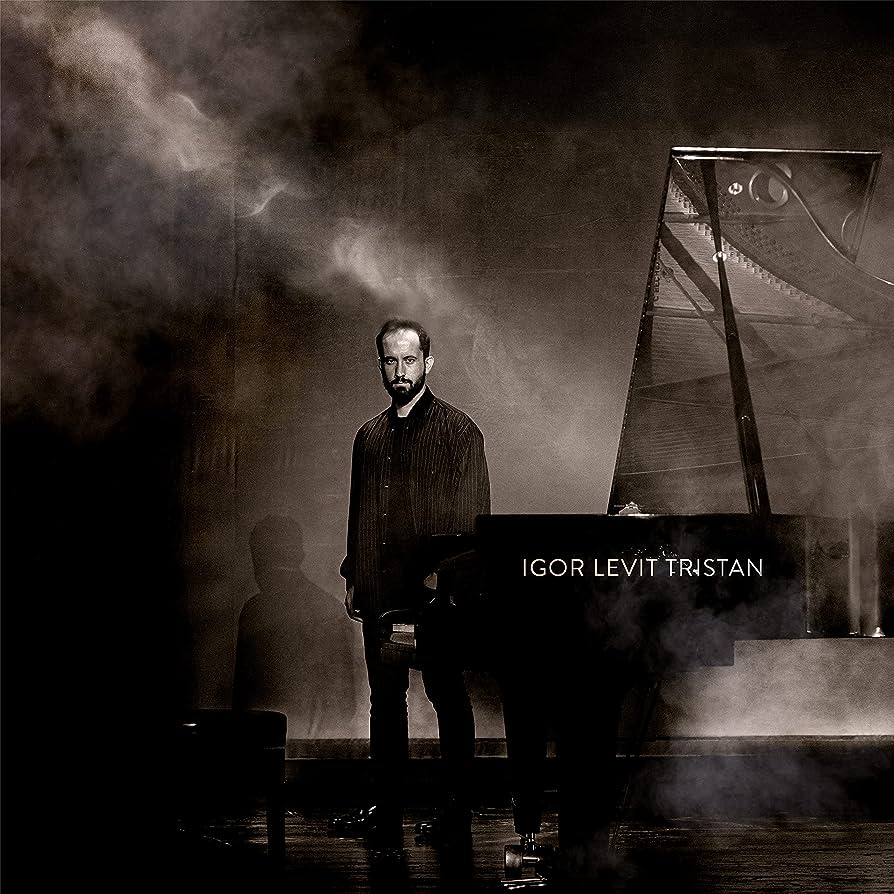
TRISTAN – IGOR LEVIT

TRISTAN – IGOR LEVIT

Igor Levit’s ‘Tristan’ – An enchanting Exploration of Musical Landscapes

Mark Jordan, September 2022

Embark on a captivating musical adventure with Igor Levit’s latest album ‘Tristan,’ a stunning compilation published by Sony Classical. Renowned for his thought-provoking thematic program concepts, Levit once again delivers a collection of extraordinary musical works that leave a lasting impression.

Disc 1 begins with Liszt’s Liebestraum No. 3, but Levit’s interpretation is far from the ordinary. Stripping away the excesses of sentimentality, he presents a brisk and unsentimental performance that unveils the work’s art song origin. Levit’s unique approach sheds new light on this well-known piece, offering a refreshing and invigorating listening experience.

Henze’s ‘Tristan,’ a six-movement composition subtitled “Preludes for Piano, Tapes, and Orchestra,” takes center stage with Levit at the helm. The multifaceted nature of this work demands technical finesse and interpretive brilliance, and Levit meets the challenge with ease. As the music meanders between quiet contemplation and explosive fury, Levit navigates with suave expertise, setting new standards for this remarkable piece. The engineering perfectly captures the complexities and dynamic extremes of Henze’s scoring, allowing the Gewandhaus forces, conducted by Welser-Möst, to shine in all their glory.

While Levit’s performance of Henze’s ‘Tristan’ is undeniably exceptional, connoisseurs might also appreciate the world-premiere recording featuring pianist Homero Francesch, with the composer conducting the Cologne Radio Symphony Orchestra. Francesch’s precise detailing and close microphone placement offer a compelling alternative that resonates with equal brilliance.

Continuing the journey, Levit presents Zoltan Kocsis’ transcription of Wagner’s Tristan und Isolde Act 1 Prelude. In a departure from other interpretations, Levit embraces a deliberate pace, skillfully using pedal effects to sustain tension and draw listeners deeper into the music. His masterful handling of this work highlights his versatility as a pianist and his ability to convey intricate emotions with grace and precision.

The album takes an emotionally intense turn with Ronald Stevenson’s piano edition of the Adagio from Mahler’s Tenth Symphony. Levit’s interpretation, clocking in at nearly 28 minutes, is a poignant and harrowing experience that tugs at the heartstrings. With profound depth and harmonic intensity, Levit extracts every ounce of emotion from Mahler’s counterpoint, leaving a lasting impact that lingers long after the last note has faded.

Concluding the album is Liszt’s Harmonies du Soir, where Levit once again demonstrates his ingenuity. His refreshing approach, marked by ingenuous pedaling and phrasings that minimize sentimentality and bombast, breathes new life into Liszt’s composition. Levit’s performance makes the work sound remarkably modern, revealing hidden layers and nuances that captivate the listener.

In ‘Tristan,’ Igor Levit showcases not only his technical brilliance but also his ability to connect deeply with the music’s emotional landscapes. His audacious programming choices add depth and meaning to the album, inviting listeners on a mesmerizing journey through the diverse realms of classical music.

‘Tristan’ is an enthralling and self-recommending album that unveils the artistic mastery of Igor Levit. With each track, he takes us on a profound exploration of musical landscapes, leaving us enchanted and inspired. This album is a must-have addition to any discerning music lover’s collection, promising endless hours of musical delight and introspection.

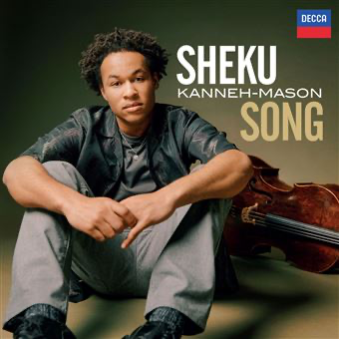
SONG – SHEKU KANNEH-MASON

SONG – SHEKU KANNEH-MASON

“Song” by Sheku Kanneh-Mason: A Personal and Poignant Cello Journey

Don Roberts, September 2022

Sheku Kanneh-Mason’s latest album, “Song,” takes us on a deeply personal musical journey, showcasing the young cellist’s growth and maturity as a musician. In contrast to his previous release, “Inspiration,” which explored works that influenced him during his formative years, “Song” delves into the musician he has become today, presenting a diverse and eclectic selection of pieces.

Right from the outset, the album establishes its focus on the expressive qualities of the cello. The opening track, a tender arrangement of the Irish tune “Star of the County Down,” sets the tone for the entire recital. Kanneh-Mason’s playing is warmly lyrical, and his emotive interpretation shines through. In the following track, his skillful use of bow strokes and vibrato in the Welsh song “Myfanwy” further emphasizes his dedication to the singing aspects of his instrument.

Throughout the album, Kanneh-Mason showcases his versatility by exploring different genres. The mercurial shifts of “Lullaby for Kamilla” are beautifully captured, while the blues-influenced harmonies in “Cry Me a River” evoke a more extroverted emotional response from both the cellist and pianist Harry Baker. The surprising success of his arrangement of Burt Bacharach’s “I Say a Little Prayer” demonstrates his ability to infuse a familiar piece with playful elegance and sweetness.

For those seeking more classical repertoire, the five-cello arrangement of Villa-Lobos’ “Prelúdio” and Beethoven’s “12 Variations on ‘Ein Mädchen oder Weibchen'” offer moments of technical fluency and artistic finesse. The velvety yet introverted coloring in the two arrangements of Mendelssohn’s “Songs without Words” and the beautifully played “Louange à l’Éternité de Jésus” from Messiaen’s “Quartet for the End of Time” further display Kanneh-Mason’s expressive depth.

While some listeners may come to the album expecting more technically demanding pieces, Kanneh-Mason’s intent is clear: he invites us into an intimate space, sharing music that has profoundly touched and influenced him. The album may not aim to impress with virtuosic brilliance, but it excels in its communicative power and the unyielding beauty of Kanneh-Mason’s playing.

Ultimately, “Song” will undoubtedly resonate with the cellist’s devoted fan base, but it also seeks to attract a broader audience by offering an engaging variety of genres. Through this collection, Sheku Kanneh-Mason shares his musical soul, inviting us to experience the emotional depth and sensitivity that have come to define his remarkable artistry.

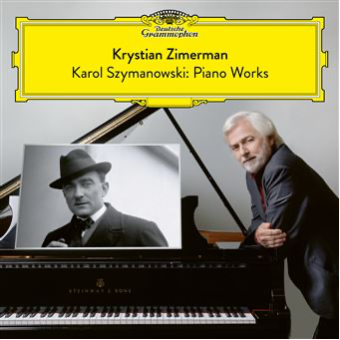
KAROL SZYMANOWSKI PIANO WORKS – KRYSTIAN ZIMERMAN

KAROL SZYMANOWSKI PIANO WORKS – KRYSTIAN ZIMERMAN

Szymanowski: Piano Works Review – Glowing Jewels from a Supreme Pianist

Mark Jordan, September 2022

Szymanowski: Piano Works” on Deutsche Grammophon, proves to be a captivating and exquisite exploration of the music of his native Poland. This solo disc comes after a five-year hiatus from Zimerman’s solo recordings, making it a highly anticipated and special event for classical music enthusiasts.

The album showcases a thoughtful selection of Karol Szymanowski’s piano works, providing a comprehensive glimpse into the different phases of the composer’s artistic development. While some of Szymanowski’s well-known pieces, like the three “poems” of Métopes and all three piano sonatas, are absent, Zimerman’s careful curation ensures the representation of various facets of the composer’s style.

The disc commences with the four preludes from Szymanowski’s Op. 1, composed in 1900. Zimerman’s masterful interpretation transforms these preludes into radiant jewels, revealing their Chopinesque influences. The stylistic contrast becomes evident as we progress to the Masques, written 15 years later. In this set of character pieces, Szymanowski’s modernism comes to the fore, drawing inspiration from Scriabin, Stravinsky, and Debussy. Zimerman’s playing demonstrates a remarkable command of keyboard texture and color, reminiscent of his unparalleled Debussy performances.

The album further highlights Szymanowski’s mature phase with a selection of mazurkas from Op. 50. Here, Zimerman gracefully navigates the delicate lyricism juxtaposed with the rustic robustness inspired by the folk music of the Tatra mountains, offering a captivating contrast to the earlier pieces.

The culmination of the album lies in the Variations on a Polish Folk Theme Op. 10, composed in 1904. In this piece, Zimerman masterfully executes a funeral march reminiscent of Chopin’s style, followed by a bravura fugal finale. The recording showcases yet another facet of his exceptional pianism, as he exhibits command over virtuoso brilliance as well as the subtlest nuances of phrasing and pacing.

Throughout the album, Zimerman’s deep connection to his native Polish music is palpable, and his interpretation of Szymanowski’s works is marked by a genuine affection for the composer’s creations. His technical prowess and artistic sensitivity converge seamlessly, producing a marvellous listening experience.

This CD is a true gem that leaves a lasting impression, making it an essential addition to any classical music lover’s collection.